RALLY STORY 005 / Rally Story
Some Things Cannot Be Learned in a Boardroom
A boardroom can clarify an argument. A demanding environment can reveal how a founder reads uncertainty, shares responsibility, and turns reflection into commitment.
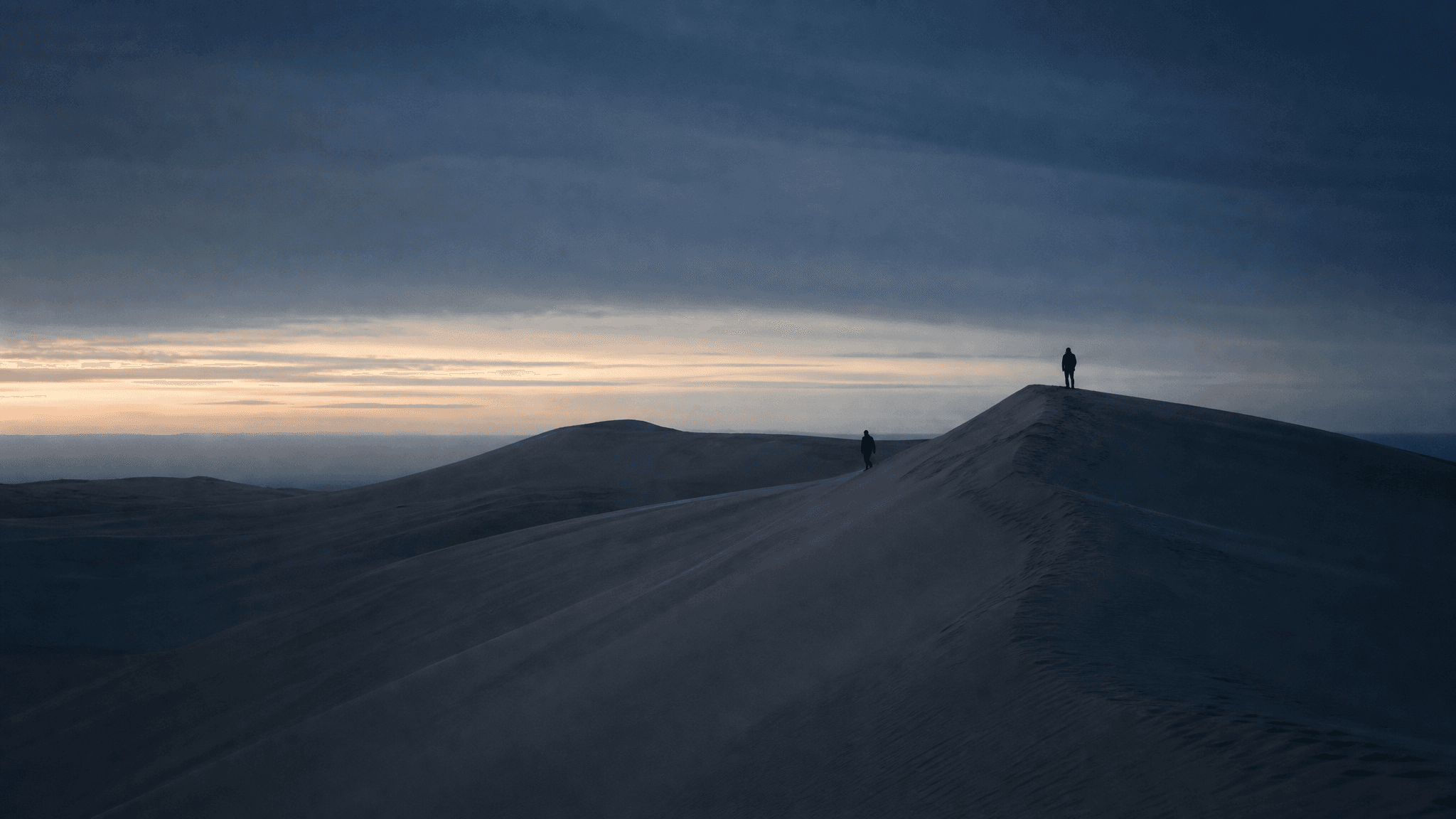
Boardrooms are useful places. They create distance from daily operations. They allow a team to put a problem on the table, compare perspectives, and give language to a decision that has remained vague.
But some things cannot be learned there.
A presentation can explain how a founder thinks about uncertainty. A demanding environment can reveal how that founder actually moves through it—how information is shared, how responsibility is carried, what happens when a plan changes, and whether reflection becomes a different decision afterward.
This is the premise of a Founder Rally as a method. It is not an argument against strategy work, and it is not a claim about an event that has already taken place. It is a way of designing conditions in which important founder questions become harder to keep abstract.
The environment changes the conversation
Inside a familiar room, people know their roles. The founder leads. The advisor asks. The team presents. Everyone has access to the vocabulary and routines that make them competent.
Change the environment and some of that protection disappears.
A route must be read. Pace must be adjusted. Energy is finite. Weather, terrain, equipment, and other people introduce conditions that cannot be controlled by authority alone. The body becomes part of the decision, making fatigue, impatience, confidence, and hesitation more visible.
The objective is not hardship for its own sake. Difficulty without purpose is theatre. The value comes from a carefully bounded challenge that creates enough uncertainty to make patterns observable, while preserving safety, dignity, and the ability to choose.
What does a founder do when the fastest person is not the person with the best view of the route? Who asks for help early, and who waits until a small problem becomes a large one? When conditions change, does the group protect the original plan or update it?
These moments are not conclusions about character. They are material for reflection.
Movement makes interdependence visible
Leadership is easy to describe as a personal quality. In motion, it is more clearly relational.
No one crosses complex terrain through individual force alone. A group depends on clear signals, honest assessments of capacity, and a shared understanding of when to continue or regroup. The strongest participant can damage the whole system by setting a pace that others cannot sustain. A quieter participant may hold the observation that prevents the wrong turn.
That makes responsibility tangible. Leadership becomes less about occupying the front and more about helping the group maintain direction.
Different formats can reveal different dimensions. Walking removes much of the protection of speed and asks for patience. Riding requires balance between individual control and awareness of others. Driving introduces route, machine, communication, and consequential decisions at pace. A longer rally format can combine movement with structured pauses for reflection and commitment.
These are design possibilities, not claims of a single universal experience. The format should follow the founder question, not the other way around.
Reflection is the real crossing
An experience does not create insight merely because it is intense. Without reflection, it may become only a memorable day.
The real work begins when an observed pattern is translated back into the company.
Where else do we confuse speed with direction? Which signal does the leadership team repeatedly ignore? What responsibility remains ambiguous because everyone assumes someone else owns it? When do we continue defending a plan after the terrain has changed? What kind of help does the founder find hardest to request?
The questions should be specific enough to produce a decision. If a founder recognizes that every change of route still requires personal approval, the next commitment might concern decision rights. If a team discovers that bad news arrives too late, the work may be to redesign how risk is surfaced. If the group moves quickly but cannot explain what it is crossing, the company may need to name its next dune before adding another initiative.
Insight becomes useful when it changes behavior, structure, or allocation—not when it remains a metaphor.
Safety is part of the method
Any serious experience involving route, vehicles, remote terrain, or physical effort requires professional boundaries.
Strategy and community roles are different from route design, vehicle operations, medical readiness, and participant safety. The latter require qualified operating partners, appropriate procedures, real-time judgment, and clear responsibility. A founder program should never imply that inspiration substitutes for operational competence.
Participation also requires choice. Physical difficulty is not a measure of founder quality. Formats must respect different abilities, health conditions, and comfort levels, with meaningful alternatives where needed. The point is to create conditions for judgment and connection, not to reward bravado.
These constraints do not reduce the experience. They give it integrity.
Return with a commitment
The boardroom remains essential. It is where observations can become language, priorities, governance, and work. The purpose of leaving it is to return with something that could not have been found there as easily.
Not a trophy. Not a dramatic story. Not a temporary feeling of endurance.
A clearer recognition of how the founder navigates. A more honest view of how the group works under uncertainty. A relationship deepened through shared responsibility. And one commitment specific enough to change what happens on Monday.
Some things cannot be learned in a boardroom because they need to be encountered before they can be named.
The important question is not how far the group travelled.
It is what the founder can now see more clearly—and what the company will do differently at its next dune.